
Do Rich Snippets Help SEO? What Still Works
· Cole Stark · 5 min read
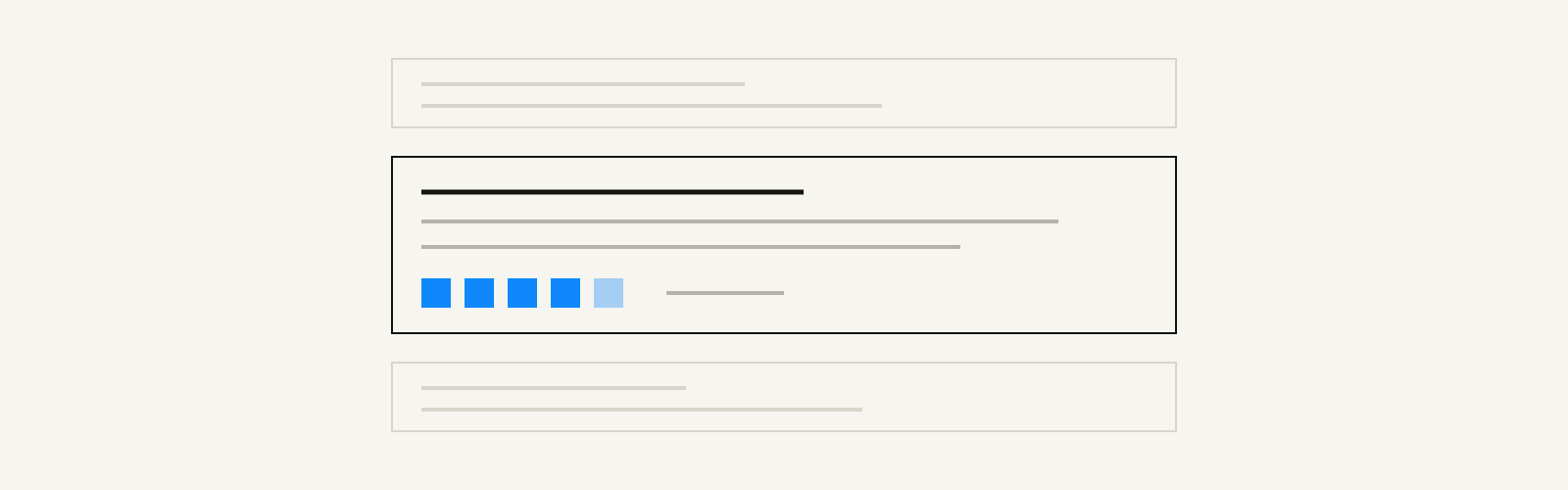
Do rich snippets help SEO? They help your clicks more than your rankings. Rich snippets change how your listing looks in Google, with ratings, prices or breadcrumbs, and that can raise click-through rates on the rankings you already have. They won't lift a page that doesn't rank, Google never guarantees them, and some of the most popular types are gone.
Below is what a rich snippet is, what the evidence says, what changed recently, and how to create rich snippets that still show.
What is a rich snippet?
A rich snippet is a search result with extra information pulled from the page's structured data: star ratings, prices, availability, breadcrumbs, video thumbnails or event dates. Google calls these rich results. A plain result shows a title, a URL and a description.
The extra information comes from structured data, a standard way of labeling what's on a page using the schema.org vocabulary. Google recommends the JSON-LD format, a block of code in the page that search engines read and visitors don't see.
Do rich snippets help SEO?
Rich snippets help SEO through clicks. Google's own introduction to structured data lists case studies: Rotten Tomatoes measured a 25% higher click-through rate on pages with structured data, and Nestlé measured an 82% higher click-through rate on rich result pages than on non-rich ones. These are Google's case studies, so treat them as best cases, but the direction is consistent.
What rich snippets don't do is guarantee anything. Google's structured data policies say it doesn't guarantee your structured data will show up, and that markup enables a feature to appear without guaranteeing it will.
So rich snippets in SEO work as a multiplier. They make a ranking page more clickable. They don't make a page rank.
Which rich snippets still show
The list keeps shrinking, so check before you build around a type:
- In August 2023, Google scaled back HowTo and FAQ rich results.
- In May 2026, it deprecated FAQ rich results entirely. They stopped appearing in Google Search on May 7, 2026.
Types that still matter for most B2B and SaaS sites include breadcrumbs, organization details, articles, videos, products with price and availability, and software applications, which can show a rating and price. Google's search gallery lists every type currently supported.
FAQ sections are still worth writing. They answer follow-up questions and they're easy for AI answers to quote. They just no longer change how your listing looks.
Rich snippets for SaaS sites
For a SaaS company, I'd prioritize four types of structured data:
- Organization on the homepage, with your logo, name and profiles, so search engines describe the company consistently.
- SoftwareApplication or Product on product and pricing pages, with real prices and, where you have them, genuine ratings.
- Article or BlogPosting on blog posts, with the author and dates.
- BreadcrumbList on every page, so results show where a page sits on your site.
Only mark up what's visible on the page. Ratings you can't support, or markup that doesn't match the content, can earn a manual action that removes your rich results.
How to create rich snippets
Here's how to create rich snippets and give them the best chance of appearing:
- Pick the structured data type that genuinely describes the page.
- Write the markup in JSON-LD with every required property for that type, using the values shown on the page.
- Test the page with Google's Rich Results Test, and fix every error before you publish.
- Deploy, then request indexing for the page in Search Console's URL Inspection tool.
- Watch the rich result reports in Search Console for errors and for how many pages are eligible.
How to get rich snippets to actually appear
Valid markup is the entry ticket, not the prize. To get rich snippets to appear, the page also has to rank for the query, and Google has to decide the rich result helps the searcher. Improve the page itself and keep the markup accurate. Results can take weeks to show after Google recrawls the page.
Most site builders and CMS plugins generate common types automatically. Check what yours outputs before adding more, because duplicate or conflicting markup causes errors.
Rich snippets and AI search
Structured data helps search engines understand what a page is, and that understanding feeds every search feature. But you don't need special markup to appear in AI answers. Google's guide to AI features and your website says there's no special schema.org structured data you need to add for AI Overviews or AI Mode.
What gets you into AI answers is ranking, answering questions directly and being a trusted source. I cover that in my guide to generative engine optimization, and the question-led side in AEO marketing.
So, do rich snippets help SEO?
Do rich snippets help SEO? Yes, as a way to win more clicks from rankings you've already earned, and no, as a way to earn rankings. Add accurate structured data for the types Google still shows, test it, and spend the rest of your effort on the pages themselves. For the full picture, see my guide to SEO for SaaS startups, and my SEO and GEO services cover structured data as part of technical SEO.
Rich Snippets FAQs
Are rich snippets a ranking factor?
Rich snippets aren't a way to rank higher. Google describes structured data as a way to understand pages and make results more engaging, and it never guarantees a rich result will appear. The SEO benefit is indirect: a richer listing can earn a higher click-through rate on the rankings you already have.
What is a rich snippet in SEO?
A rich snippet in SEO is a search result that shows extra details pulled from a page's structured data, like star ratings, prices, availability, breadcrumbs or video thumbnails. Google calls them rich results. They need valid structured data, usually in JSON-LD, and Google decides whether to show them.
Why isn't my rich snippet showing?
Your rich snippet may not be showing because the markup has errors, the page doesn't rank for the query, the type is no longer supported, or Google decided a plain result fits the search better. Test the page in the Rich Results Test, check Search Console's reports, and confirm the type still appears in Google's search gallery.
What's the difference between rich snippets and featured snippets?
The difference between rich snippets and featured snippets is where they come from. Rich snippets add details like ratings or prices to your normal listing, using your structured data. Featured snippets are answer boxes at the top of the results, which Google's systems pick from page content, and you can't mark a page as one.