
A Guide to Generative Engine Optimization
· Cole Stark · 13 min read

This guide to generative engine optimization (GEO) is for founders and marketing leads who want their company cited when buyers ask ChatGPT, Perplexity, Claude or Google's AI Overviews for advice. GEO is the work of making your content easy for AI search tools to find, trust and quote. Most of it is SEO done well, plus a few additions that matter more now than they did two years ago.
I ran SEO and content as Head of Growth at Quadratic and Pieces for Developers. Now I do this work for AI, SaaS and developer-tool startups. What follows is what I'd tell a founder starting from zero: how AI search picks its sources, what to change, what to ignore, and how to measure it.
What is generative engine optimization?
Generative engine optimization is the practice of shaping how AI-generated answers describe and cite your brand. A search engine returns a list of links. A generative engine, like ChatGPT search or Google's AI Mode, writes an answer and cites a handful of sources inside it.
GEO is about being one of those sources, and being described accurately when you're mentioned.
The term comes from a paper by researchers at Princeton and IIT Delhi, GEO: Generative Engine Optimization, first published in November 2023 and presented at KDD 2024. You'll also see answer engine optimization (AEO), LLM SEO and AI search optimization. They describe the same goal with different emphasis, so I use GEO as the umbrella and cover answer engine optimization and GEO vs SEO in their own posts.
Two numbers explain the urgency. When Pew Research Center tracked the browsing of 900 US adults in March 2025, people clicked a regular result on 8% of Google searches that showed an AI summary, versus 15% when there was none. Meanwhile, ChatGPT passed 800 million weekly users in October 2025.
Fewer clicks doesn't mean less influence. Buyers still read the answer, and the brands named in it make the shortlist.
How AI search decides what to cite
AI assistants answer from two places: what the model learned in training, and what it retrieves from the web when you ask. Retrieval is the part you can influence this quarter. It works like retrieval-augmented generation: the system searches an index, reads the top results, and writes an answer grounded in them.
Google's documentation on AI features and your website describes the other half, query fan-out. AI Overviews and AI Mode run several related searches across subtopics before writing the answer, so one question from a buyer becomes several searches you could rank for.
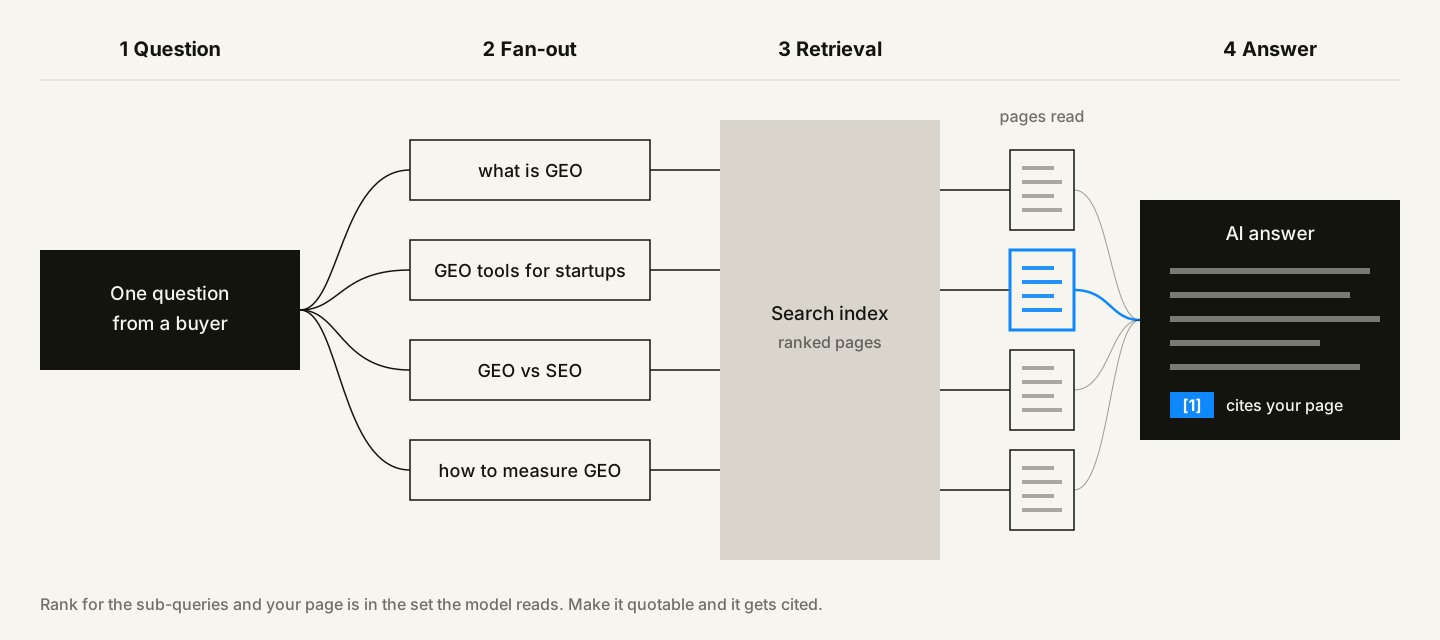
Not every answer involves a search. Some come straight from training data, frozen at the model's cutoff, and many systems decide question by question whether to look things up. You can't edit training data, so the practical lever is retrieval: be in the results the assistant reads today, and be quotable when it gets there.
That's why rankings still matter. Seer Interactive asked GPT-4o 10,000 questions drawn from finance and SaaS keywords and compared the answers with search rankings. Page-one Google rankings correlated with brand mentions at about 0.65.
Bing rankings mattered somewhat less, at about 0.5 to 0.6. Backlinks barely registered, and neither did adding images or video.
The GEO paper tested what changes inside a page. Adding quotations, statistics and citations to sources raised a page's visibility in generated answers by up to 40% on the researchers' benchmark. Keyword stuffing, the old SEO trick, did worse than the unedited page on the paper's main measure.
GEO vs SEO: what changes and what doesn't
Google's position, in its guide to optimizing for generative AI features, is that GEO and AEO are still SEO from its side. I agree with most of that. The fundamentals don't change, some tactics do, and the goal shifts from winning the click to being the source.
| Stays the same | Changes with generative engine optimization | |
|---|---|---|
| Goal | Rank for the queries buyers search | Be cited and described accurately inside the answer |
| Content | Pages that fully answer a query | Answer first, with facts, quotes and sources a model can lift |
| Keywords | Research real queries | Plan by theme, because prompts are longer and fan out into sub-queries |
| Technical | Crawlable, indexable, fast pages | AI crawlers allowed, and content that renders without JavaScript |
| Off-site | Your reputation in the market | Mentions in reviews, forums, press and video carry more weight than links |
| Measurement | Rankings, clicks, signups | Citations, share of mentions, and AI referral sessions |
The buying journey splits across tools, too. In my experience, people use chat assistants to understand a problem and Google to pick a vendor, so high-intent product and comparison queries still run mostly through search. Informational content feels the shift first: definitions and how-to posts lose clicks to AI answers, while product, pricing and comparison pages keep converting.
The mistake is treating GEO as a separate program with a separate budget. It's the same program with a wider definition of ranking.
How to optimize content for AI search
Six changes do most of the generative engine optimization work on the page itself.
Answer the question in the first two sentences
Put a direct answer of 40 to 60 words right under the heading, then expand. Retrieval systems lift passages, and a passage that answers on its own is the one that gets quoted. The same habit wins featured snippets, which is why it's the first thing I fix on any page.
Then give people a reason to click even when the answer gets summarized: a calculator, a template, a full breakdown or original data. My SEO copywriting checklist covers the rest of the on-page basics.
Add statistics, quotes and sources
This is the clearest finding in the GEO research. Use real numbers with a source and a date, quote named people, and link to primary sources.
Pages that read as opinion with nothing to check get passed over. Pages that cite their evidence give a model something safe to repeat.
Make your company one consistent entity
Models reason about entities: companies, products, people and how they relate. Your company needs one unambiguous description repeated everywhere, from your site and boilerplate to directory listings, review profiles and the founder's LinkedIn. "X is the Y for Z" is a sentence you should be able to find in fifty places.
Two small additions help. Put a two to four sentence plain-text summary of what you do high on the homepage and core pages, before any logos or video. And give every article a named author with a bio, so a model can connect the expertise to your brand.
Cover the questions behind the question
Because of fan-out, one prompt becomes several searches. Plan content by theme, give each theme one page, and make that page answer the follow-up questions a buyer would ask next.
This is keyword mapping with a wider net. Themes matter more than exact phrasing now, and buyers arrive with long, specific questions instead of two-word keywords.
Publish the page types AI quotes
Specific pages get cited; homepages rarely do. Definitions, comparisons, benchmarks, how-it-works explainers and listicles are what models lift.
Listicles and comparison pages that don't read as self-serving are the most reliable way I've found to shape what a model says about a category. A fair "best tools for X" page that includes you does more than another page about yourself.
For a startup, I'd start with a plain definition of your category and an honest comparison with the alternatives buyers already consider. Then add a "best tools for X" list that includes you, with a clear note that it's yours.
Keep key pages fresh
When an assistant searches before it answers, it inherits the freshness bias of the index it searches. Pages nobody has touched in a year lose citations even when they still rank.
I put the pages that drive pipeline on a refresh cycle of about three months, and each refresh adds new data, so the new date means something.
Technical GEO: let AI crawlers read your site
None of the content work matters if AI systems can't fetch your pages, which makes technical generative engine optimization the cheapest fix on this list. Four checks cover most of the risk.
Allow the search crawlers
AI companies run separate bots for search and for model training, and you can treat them differently in robots.txt. Blocking a training bot keeps your content out of future models. Blocking a search bot keeps you out of that assistant's answers.
| Company | Search or retrieval bot | Training bot |
|---|---|---|
| OpenAI | OAI-SearchBot | GPTBot |
| Anthropic | Claude-SearchBot | ClaudeBot |
| Perplexity | PerplexityBot | None listed; Perplexity says PerplexityBot isn't used for training |
| Googlebot (AI Overviews and AI Mode use the regular index) | Google-Extended controls training and grounding in other Google AI systems |
The details are in the crawler documentation from OpenAI, Anthropic and Perplexity. OpenAI and Perplexity say changes take up to a day to apply.
Check your CDN as well. Cloudflare changed its default in July 2025 to block AI crawlers unless site owners allow them, so a startup on Cloudflare can disappear from AI search without anyone deciding it should.
Make content readable without JavaScript
Many AI fetchers don't run JavaScript. If your pricing, features or blog posts only appear after scripts load, they may never be read.
Server-render or prerender anything you want cited. This site prerenders every page to static HTML, and Google's JavaScript SEO basics cover the details.
Use structured data that matches the page
Structured data won't get you into AI answers by itself, and Google says no special markup is needed for its AI features. It still helps machines identify your organization, articles and FAQs, and it powers rich results in regular search. Keep it consistent with the visible text.
Treat llms.txt as optional
llms.txt is a proposed Markdown file that points AI agents to a site's important pages, published by Jeremy Howard in September 2024. Google says its Search features don't use it, so it neither helps nor hurts there.
It takes ten minutes and other tools may read it, so this site has one. I wouldn't expect it to move citations.
The off-site half of generative engine optimization
What a model says about you is shaped partly by pages you don't own: Reddit threads, G2 reviews, YouTube videos, podcasts and press. Muck Rack analyzed more than a million links cited by ChatGPT, Claude, Gemini and Perplexity in the second half of 2025 and found about a quarter came from journalism.
I think about it in four parts. Owned is your site. Shared is the channels you run but don't own, like LinkedIn, YouTube or a newsletter, where repurposed posts should link back to the original. Community is reviews, forums and creators, and earned is press and analysts.
Saying the same thing about your company in all four places is what makes it stick.
Two cautions. Google's guide warns against seeking inauthentic mentions, and forum communities spot astroturfing quickly. And this half is mostly PR and community work, which isn't what I do. If your gap is off-site, I'll tell you and point you to someone who does it well.
How to measure generative engine optimization
Generative engine optimization measurement is directional. No AI platform shares query volume, every tracking tool runs synthetic prompts, and answers vary by user and by day. I still track four things:
- AI referral sessions and signups in GA4, by landing page. ChatGPT adds
utm_source=chatgpt.comto links it cites, per OpenAI's publishers and developers FAQ, and Perplexity, Gemini, Claude and Copilot show up as referrers. Landing pages tell you which themes you're being cited for. - Google's AI features. That traffic sits inside Search Console's Performance report, Google's guide points to a Generative AI performance report, and most rank trackers show AI Overview presence by keyword.
- Share of mentions against named competitors, from a fixed set of prompts re-run over time. Use non-branded prompts, or the data skews toward you.
- Signups. It's the number that pays for the program, and the one I put at the top of every report.
Run the same prompts at the same cadence, split by buying stage (problem research, solution research, vendor comparison), so a change in mentions means something. The tracking tools are young and pricey for what they show. I'd start with GA4 and Search Console and add a prompt tracker once there's a baseline worth comparing against, the same way I'd approach any marketing effectiveness question. Setting up this reporting is part of my growth analytics work.
I'll cover the setup in a separate post on GEO metrics, along with ChatGPT traffic reporting and the AI search engine optimization tools worth paying for.
A 30-day GEO plan for a startup
This is how I'd sequence generative engine optimization in a startup's first month.
- Week one is the audit. Check robots.txt and your CDN for blocked AI bots, see which pages render without JavaScript, and ask ChatGPT, Perplexity and Gemini the ten questions your buyers ask. Most AI LLM SEO audits sold today are some version of this.
- Week two fixes the technical gaps. Unblock the search crawlers, prerender what matters, and write the plain-text summary for your homepage and core pages.
- Week three rewrites your ten most important pages. Answer first, add sources and numbers, and align every page with the same company description.
- Week four sets up measurement: AI referral reporting in GA4, AI Overview tracking, and a fixed prompt set you re-run every month.
After that, it's the content engine: one theme at a time, published, linked and refreshed. A GEO checklist post will go deeper on each step.
Is generative engine optimization worth it for your startup?
Usually, yes, because most of the work is SEO you should be doing anyway. If your buyers are technical, as they were at Quadratic and Pieces, they're already asking assistants which tools to try. The extra GEO work is small: a consistent entity, answer-first pages, crawler access and a measurement setup.
It isn't worth a separate program with its own budget, and it's no substitute for ranking. The pages that win citations are the pages that rank.
If you want help, my SEO and GEO services cover the whole program, and the Quadratic case study shows the organic engine behind 7,000+ signups a month. That's the core of this guide to generative engine optimization: rank first, make your pages easy to quote, and measure what you can.
Generative Engine Optimization FAQs
What is generative engine optimization?
Generative engine optimization (GEO) is the practice of making your content easy for AI assistants like ChatGPT, Perplexity, Claude and Google's AI Overviews to find, trust and cite. It combines classic SEO with answer-first writing, a consistent company description, crawler access for AI bots, and new ways to measure citations and AI referral traffic.
Does GEO replace SEO?
No. Generative engine optimization builds on SEO rather than replacing it. AI search tools retrieve from search indexes, so pages that rank well are the ones most likely to be cited, and buyers still use Google for high-intent vendor searches. Treat GEO as SEO with a wider definition of ranking, one that includes mentions and citations.
How do you optimize content for AI search?
To optimize content for AI search, answer the question in the first two sentences, add statistics, quotes and links to primary sources, and keep your company description consistent everywhere. Make sure AI crawlers can fetch the page without JavaScript, and refresh important pages regularly so retrieval systems treat them as current.
Does llms.txt help with GEO?
llms.txt is optional for GEO. It's a proposed Markdown file that lists a site's important pages for AI agents, but Google says its Search features don't use it, so it won't help in AI Overviews or AI Mode. Some other tools may read it and it's quick to add, but crawler access and clear content matter far more.
Is LLM SEO the same as GEO?
LLM SEO and GEO describe the same goal: getting large language models to find, mention and cite your brand. LLM SEO tends to focus on chat assistants like ChatGPT and Claude, while GEO also covers Google's AI Overviews and AI Mode. The tactics overlap almost completely, so run them as one program.
Does LLM SEO work for service businesses?
Yes. LLM SEO for service businesses works because buyers increasingly ask assistants to recommend agencies, consultants and firms. What helps most is a clear description of what you do and for whom, service pages that answer buyer questions directly, reviews on trusted platforms, and fair listicles or comparisons where you appear alongside competitors.