
How Long Does It Take to Rank on Google?
· Cole Stark · 7 min read
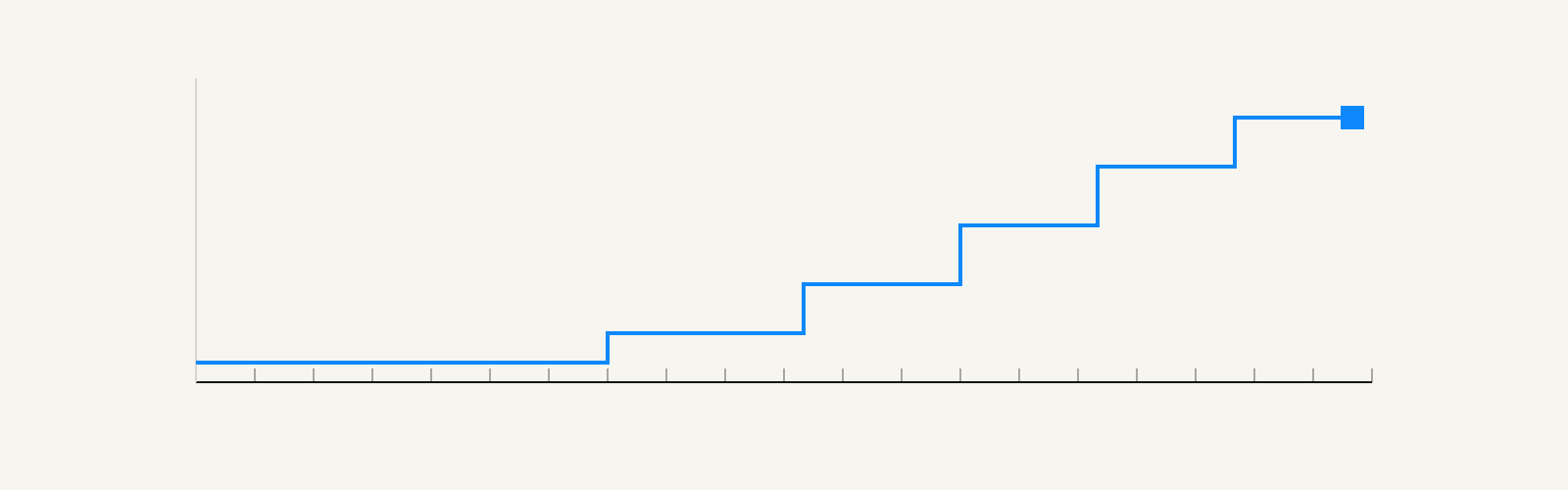
How long does it take to rank on Google? For most pages, months. Google says some changes show up in hours and others take several months.
Ahrefs found that only 1.74% of new pages reached the top 10 within a year. That sounds bleak, but the same research found that pages that do reach the top 10 often get there quickly.
The timeline depends on how competitive the search is, how established your site is, and how well the page answers the query. Below is what the data says, the timeline step by step, and what you can do to rank sooner.
How long does it take to rank on Google? What the data says
Two sources give a realistic picture.
Google's own SEO Starter Guide says every change takes some time to be reflected. Some take effect in a few hours, others take several months, and Google suggests waiting a few weeks before judging whether a change worked.
Ahrefs, the SEO tool company, has measured it directly. Its 2025 study looked at 1 million random pages first seen by its crawler in September 2023:
| Finding | Result |
|---|---|
| New pages that reached the top 10 within a year | 1.74% (6.11% in a filtered sample of 2 million English pages with real content) |
| Of those, the share that got there within the first month | 40.82% |
| Top-10 pages less than a year old | 13.7% |
| Top-10 pages more than three years old | 72.9% |
| Average age of the page ranking first | 5 years |
Read together: most pages never reach the top 10, and the ones that do often move early. If a page hasn't made progress after about six months, Ahrefs' advice is to change it rather than wait.
The timeline, step by step
Ranking happens in stages, and each has its own clock.
| Stage | Typical timing | What happens |
|---|---|---|
| Crawling and indexing | A few days to a few weeks | Google finds the page and adds it to the index |
| First impressions | Days to weeks after indexing | The page starts appearing, usually low, for long-tail searches |
| Movement | One to six months | Rankings shift as Google sees how the page performs against others |
| Settling | Six months and beyond | Positions stabilize, and the page earns links and clicks over time |
Google's guide to recrawling URLs says crawling can take a few days to several weeks, and that requesting a crawl doesn't guarantee the page will be included quickly or at all. A page that isn't indexed can't rank, so check that first.
What decides how long to rank on Google
Competition
The biggest factor is who you're up against. A specific search with few strong pages, like "[your tool] integration with [other tool]", can rank within weeks. A broad search where established sites have ranked for years can take a year or more, or never happen. Keyword difficulty scores in SEO tools are a rough guide to this.
Your site's track record
An established site with relevant content and links tends to rank new pages faster than a new domain. Google has more evidence about the site and finds new pages sooner through internal links. A brand new site should expect the slowest timeline and should start with the least competitive searches.
How well the page matches the search
Pages rank faster when they match what searchers want. If the top results are step-by-step guides and you publish a product page, you're fighting the search intent. Read the current results before writing, and match their format with a better answer.
Links and internal links
Links from other relevant sites still help pages rank, and they take time to earn. Internal links are faster: linking a new page from your strongest existing pages helps Google find it and understand what it's about.
Technical health
Pages that are slow, hard to render or blocked from crawling take longer, or never rank at all. My guide to SaaS technical SEO covers the common problems.
How long does it take to rank in Google for a new site?
How long does it take to rank in Google when the site itself is new? Longer than for an established site, and the first rankings will come from specific, low-competition searches. Expect months of impressions before meaningful clicks.
New sites do best by narrowing the target. Pick searches where the current top results are weak, thin or outdated, build one strong page for each, and link them together. Broad, high-volume terms come later, once the site has rankings and links to build on. A keyword mapping plan keeps that order clear.
How to rank faster
You can't skip Google's process, but you can avoid slowing it down:
- Target searches you can win. Low-difficulty, specific searches close to a purchase rank sooner and convert better.
- Answer the query in the first few sentences, in the format the current top results use.
- Link to every new page from relevant, established pages on your site.
- Request indexing in Search Console's URL Inspection tool after publishing or making a major change.
- Update pages stuck on page two. A page at positions 11 to 20 is often one improvement away from the first page.
- Keep pages current. My guide to the freshness factor covers when updates help and when they don't.
- Don't change a page every week. Give each change a few weeks to show an effect, as Google suggests.
When to worry
Some delays are normal and some signal a problem:
- No impressions after a few weeks usually means the page isn't indexed. Check it in Search Console.
- Impressions but no clicks after several months usually means the page ranks too low. Improve the content or target a less competitive search.
- A sudden drop in an established page's rankings is a different problem from slow growth, and needs its own diagnosis.
My guide to why is my SEO not working walks through each case. And if you need a number to plan around, an organic search forecasting model turns these timelines into expected traffic by month.
Plan in months, check in weeks
How long does it take to rank on Google? That's mostly decided before you publish, by which searches you choose and how well the page answers them. Plan your budget around months, check progress in weeks, and revise pages that stall instead of waiting for them. Picking winnable searches is the fastest shortcut there is.
That's how I plan organic programs in my SEO and GEO services. For the full approach, see my guide to SEO for SaaS startups.
How Long Does It Take to Rank on Google FAQs
How long does it take for a new website to rank on Google?
A new website usually takes several months to rank on Google for anything beyond its own brand name. Google needs time to crawl and index the site, and new domains have little history or links. Starting with specific, low-competition searches and linking pages together gives a new site its best chance of early rankings.
Can you rank on Google in a week?
You can rank on Google in a week for very specific, low-competition searches, especially on an established site. Most searches take longer. Google's SEO Starter Guide says some changes take effect within hours and others take several months, and recommends waiting a few weeks before judging whether a change worked.
How long does it take Google to index a page?
Google can take a few days to several weeks to crawl and index a page, according to its Search Central documentation. You can request indexing with Search Console's URL Inspection tool, but that doesn't guarantee quick or any inclusion. Internal links from established pages and an up-to-date sitemap help Google find new pages sooner.
How long to rank on Google for a competitive keyword?
How long to rank on Google for a competitive keyword is usually a year or more, if it happens at all. In Ahrefs' 2025 study, the average page ranking first was five years old. Most new sites do better targeting specific, less competitive searches first and building toward broader terms.
How do you know if SEO is working?
You know SEO is working when Search Console shows rising impressions for your target searches, followed by rising clicks and average position. Impressions move first, often within weeks, while clicks and signups follow months later. Track the specific pages and searches you targeted rather than total traffic, which can hide what's changing.
Should you change a page that isn't ranking?
You should change a page that isn't ranking after it has had a fair chance, usually three to six months. Check that it's indexed first. Then compare it with the current top results for format, depth and freshness, and improve the gaps. Ahrefs' data suggests pages rarely break into the top 10 after six months without changes.