
How to Measure SaaS Content Marketing
· Cole Stark · 6 min read
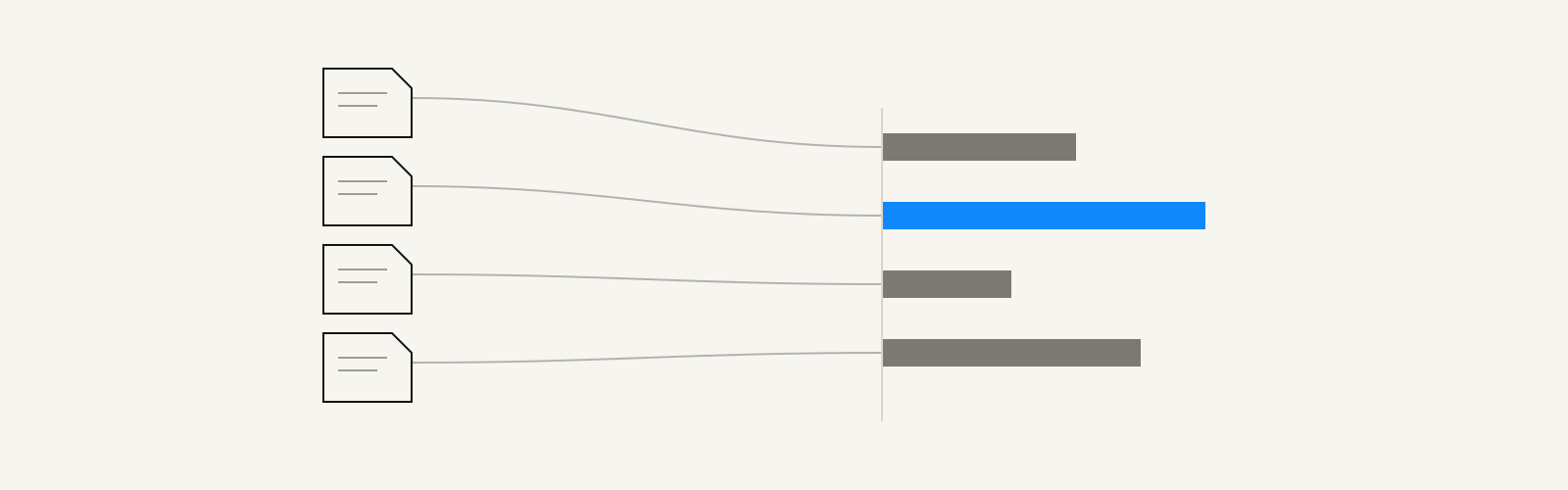
How to measure SaaS content marketing comes down to one question: what did each piece make people do? Track signups and activated users by the content page they first landed on, the share of new customers who read content before signing up, and the cost per customer of producing it. Traffic and rankings are leading indicators, not results.
Ask a team how to measure SaaS content marketing and most will show you page views, because that's what analytics reports by default. Here's how to set up tracking that goes further, which metrics fit each kind of content, how to work out content ROI and what to put in a monthly report.
How to measure SaaS content marketing by job
Measure content marketing against the job each piece was built to do. A glossary page and a comparison page shouldn't be judged on the same number.
| Content job | Primary metric | Leading indicator | Where it comes from |
|---|---|---|---|
| Get found by people learning about the problem | Newsletter signups, return visits | Impressions and clicks by topic | Search Console, analytics |
| Show your way of solving it | Signups started from the page | Rankings for problem queries | Analytics, product data |
| Make the shortlist | Signups and demo requests | Rankings for comparison and integration queries | Analytics, CRM |
| Get users to value | Activation rate | Docs and guide visits after signup | Product data |
Give every piece one job before it's written, and record it next to the URL. When you review results, compare each piece with others doing the same job.
Set up content tracking
Default analytics can tell you which pages got visits. To measure content properly, add four things.
First, group your content. Google Analytics 4 (GA4) supports content groups, which let you "categorize pages and screens into custom buckets" through the content_group parameter. Group by format and by funnel stage, so you can compare all comparison pages against all tutorials.
Second, store the first page a new user saw. Capture the landing page and source in hidden fields on the signup form, and save them on the user record in your product database. That turns "this post got 4,000 visits" into "this post started 60 signups."
Third, send product events. Activation and payment happen in your app, not on your site, so they need to come from your backend. Join them to the landing page on user ID or email.
Fourth, ask. A "How did you hear about us?" field catches people who read three posts, left and came back by typing your name. Analytics will record them as direct traffic.
The SaaS content marketing metrics that matter
These are the numbers I'd track for each piece and each content group:
- First-touch signups: new users whose first visit was the page.
- Activation rate of those users, compared with your overall rate. Content that brings in users who never activate is costing you onboarding effort.
- Content-assisted signups: users who visited content at any point before signing up.
- For sales-led products, pipeline from accounts that read content before an opportunity opened.
- Impressions and clicks by topic in Search Console, as the leading indicator for organic content.
- Referral visits from AI assistants to content pages, which show whether your content is getting cited.
First-touch numbers undercount content, and assisted numbers overcount it. Report both, so nobody mistakes one for the truth.
SaaS content marketing ROI
SaaS content marketing ROI compares what content costs with the customers it brings in. The cost side is straightforward: writers, editors, design, tools and the time of anyone reviewing.
Here's a hypothetical. A team spends $12,000 a month on content. Content pages are the first touch for 150 signups a month, and 8% of them become paying customers at $100 a month. That's 12 new customers a month, at a content cost of $1,000 per customer.
Compare that with paid channels, which stop producing the moment you stop paying. Content keeps producing signups after it's published, so its cost per customer usually falls as the library grows. Judge it over 6 to 12 months, not one.
Content marketing measurement over time
Content takes months to show results, so measure what's measurable at each stage:
| Time since publishing | What to judge | What not to judge yet |
|---|---|---|
| First month | Indexed, impressions starting, internal links in place | Signups |
| Months 2 to 4 | Rankings and clicks for the target query | Revenue |
| Months 4 to 12 | First-touch signups, activation rate, assisted signups | |
| After 12 months | Cost per customer, payback, whether it needs a refresh |
Pages that rank and then decline need attention. My guide to the freshness factor covers when a refresh helps.
A monthly content report
One page, the same each month:
| Section | What it shows |
|---|---|
| Totals | First-touch signups, activated users and new customers from content, with the trend |
| By content group | The same numbers by format and funnel stage |
| Top and bottom pages | The ten pages producing the most signups, and the ten getting traffic with no signups |
| Leading indicators | Impressions and clicks by topic, AI referral visits |
| Cost | Content spend and cost per new customer |
| Decisions | What to write more of, what to refresh, what to stop |
The bottom-ten list matters as much as the top. A page with traffic and no signups usually ranks for the wrong intent or lacks a next step.
Search Console and GA4 will disagree on clicks and sessions, which is normal. My guide to Google Search Console vs Google Analytics explains why.
Metrics to stop reporting
- Page views on their own. They say nothing about whether the right people came.
- Time on page without a conversion beside it. A confused reader also spends a long time on a page.
- Social likes and shares, unless the post's job was distribution.
- Number of posts published. Output isn't a result.
Measure SaaS content marketing like a channel
Knowing how to measure SaaS content marketing changes what gets written. Give each piece a job, track first-touch and assisted signups through to activation, compare cost per customer with your other channels, and refresh what decays. My guide to SaaS content marketing covers the strategy side, and building the reporting is part of my growth analytics work.
Content Marketing Measurement FAQs
What metrics measure SaaS content marketing performance?
SaaS content marketing performance is best measured by first-touch signups, the activation rate of those users, content-assisted signups and cost per new customer. Impressions, clicks and rankings are useful leading indicators. Page views alone don't show whether content brought in people who will use or buy the product.
How long does it take to measure content marketing results?
It takes four to twelve months to measure content marketing results reliably. New pages need weeks to get indexed and months to rank, and signups follow rankings. Judge early pieces on impressions and rankings, and wait at least a quarter before judging them on signups, longer for revenue.
How do you calculate SaaS content marketing ROI?
You calculate SaaS content marketing ROI by comparing content costs, including writers, editors, design and tools, with the gross profit from customers whose first touch was content. Divide content spend by new customers to get cost per customer, and compare it with paid channels over at least six months.
What is a content-assisted conversion?
A content-assisted conversion is a signup or sale where the person visited a content page at some point before converting, even if they arrived the last time from somewhere else. It shows content's influence beyond first-touch attribution. Report it beside first-touch numbers, because assisted counts tend to overstate content's role.
Should you gate content to measure it?
You usually shouldn't gate content just to measure it. Gates reduce readership and search visibility, and many people enter throwaway details. Track first-touch landing pages, assisted signups and self-reported sources instead. Gate only content valuable enough that readers will trade an email for it, like original research or templates.